72 Acres, $0 in Property Tax: What the County Jail Means for Garfield Heights Residents

Right now, 72 acres of prime land at Transportation Boulevard and Granger Road sit at the center of one of the biggest investments Cuyahoga County has ever made.
The county is building an $890 million Central Services Campus — a jail — on land it purchased from Craig Realty Group for $38.7 million.
It’s a massive project. An 852,000-square-foot, three-story facility with 1,886 beds, medical clinics, a pharmacy, and a 26-bed infirmary. Construction is set to begin in August 2026, with completion expected in late 2028 or early 2029.
But here’s what no one at the county level wants to talk about: that land is now tax-exempt. Every acre of it. And it will stay that way for as long as the county owns it.
That means Garfield Heights — a city of 29,781 people already stretched thin — collects exactly $0 in property tax from a billion-dollar property sitting inside its borders.
Let’s Do the Math
In Ohio, property is assessed at 35% of its market value. The effective commercial tax rate in Garfield Heights is approximately 3.60%.
If you take the jail’s construction cost of roughly $1 billion and add the $36 million land value, you get a total market value of $1.036 billion. That translates to an assessed value of $362.6 million.
At 3.60%, that single parcel would generate $37.3 million per year in property tax revenue.
| Component | Market Value | Assessed Value (35%) | Annual Tax (3.60%) |
|---|---|---|---|
| Land (72 acres) | $36,000,000 | $12,600,000 | $1,296,000 |
| Structure | $1,000,000,000 | $350,000,000 | $36,000,000 |
| TOTAL | $1,036,000,000 | $362,600,000 | $37,296,000 |
Let that number sink in. $37.3 million — every single year — that Garfield Heights and its taxing authorities will never see.
Who Loses?
Property tax revenue in Cuyahoga County doesn’t go to just one place. It’s split across schools, the county, the city, the library, MetroParks, and other levies. Here’s how the $37.3 million would be distributed:
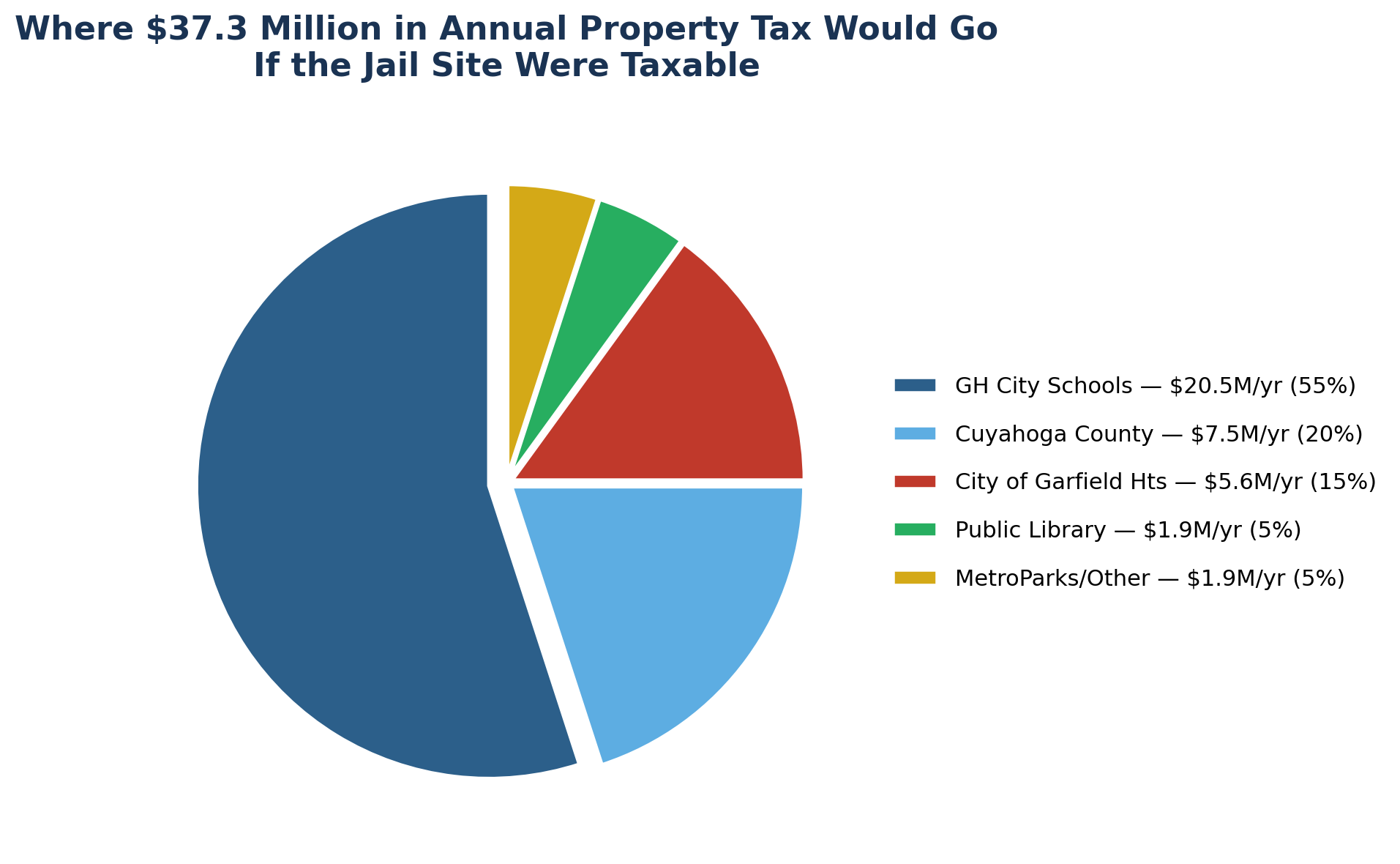
Fig. 1: Annual property tax distribution if the jail site were taxable
- Garfield Heights City Schools: $20.5 million/year — The school district reported a $2.9 million deficit in 2025. This one parcel would eliminate that deficit seven times over. Instead, the schools get nothing.
- City of Garfield Heights: $5.6 million/year — Money that could repave roads, hire police officers, clean up blighted properties, and improve parks in every ward.
- Cuyahoga County Public Library: $1.9 million/year — Funding for the Garfield Heights branch and the broader library system that serves our residents.
- MetroParks and other levies: $1.9 million/year — Supporting the green spaces and services our community depends on.
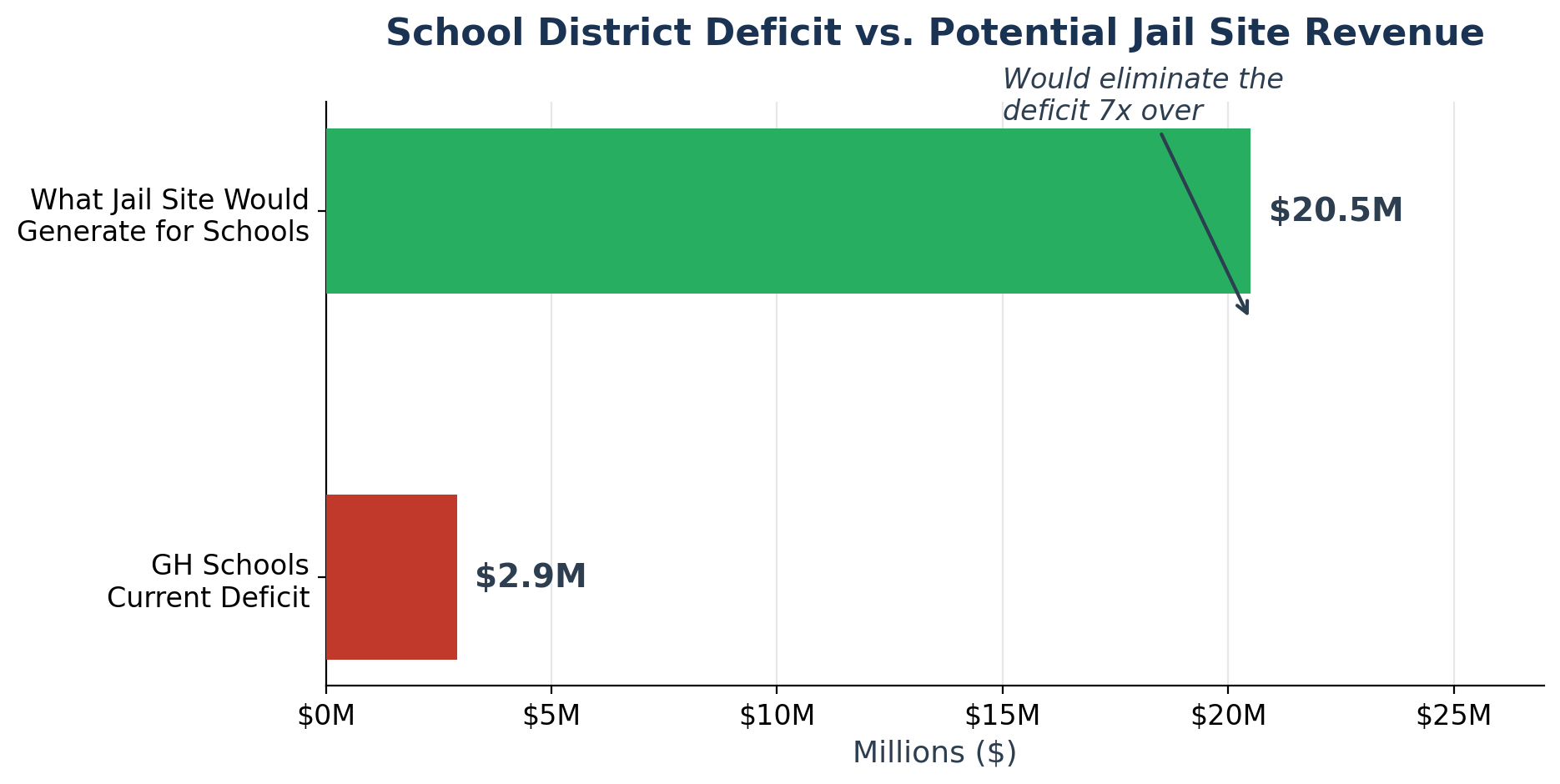
Fig. 2: The jail site would generate enough for schools to eliminate their deficit 7 times over
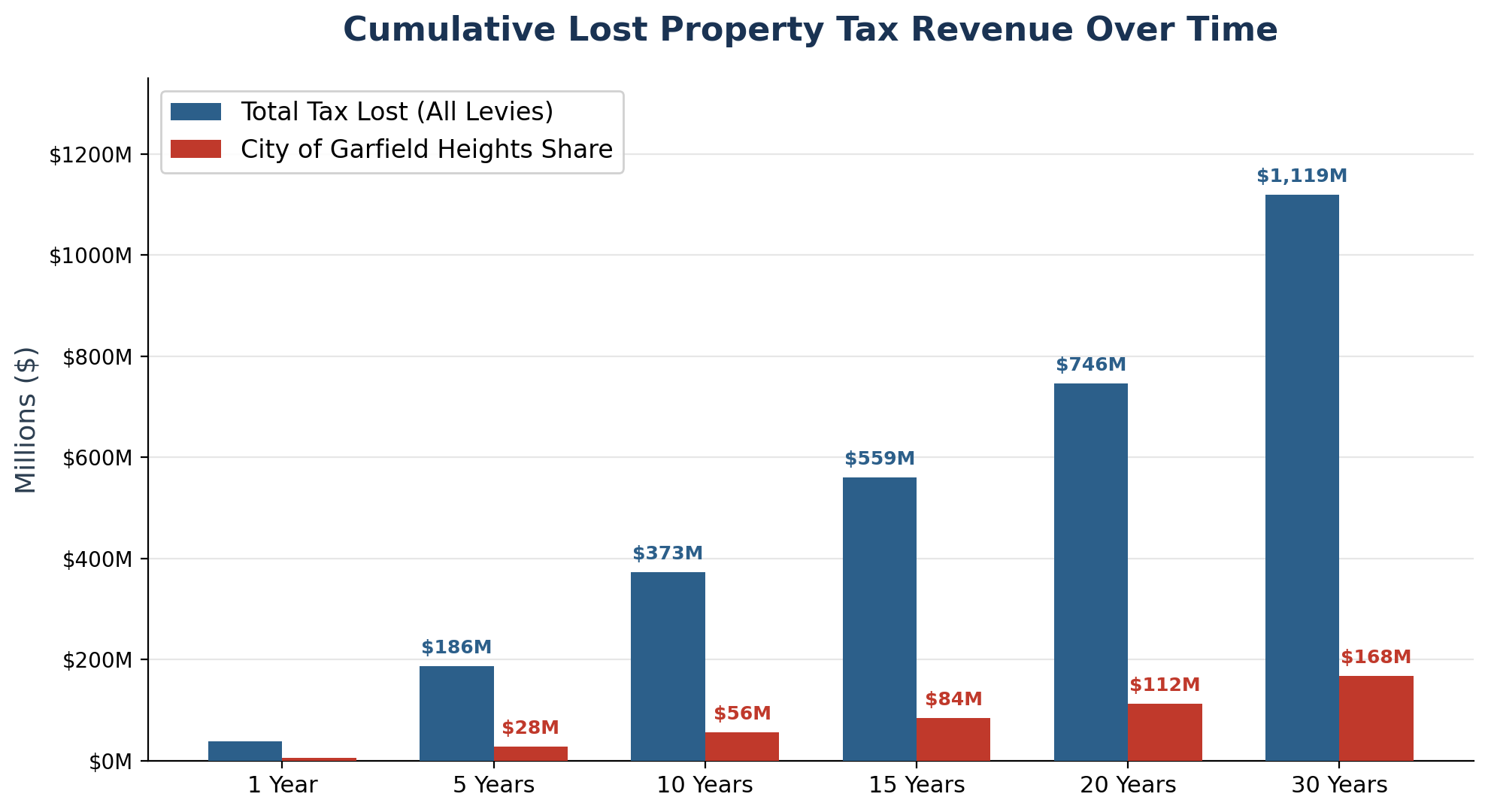
Fig. 3: Cumulative lost property tax revenue — exceeding $1.1 billion over the facility’s 30-year life
Over 10 years, the total lost revenue is $373 million. Over the 30-year expected life of the facility, it exceeds $1.1 billion — more than the cost of building the jail itself.
What If the Land Had Been Developed?
Forget the billion-dollar jail for a moment. What if a private developer had built on those 72 acres instead?
If it were residential — say, 288 single-family homes at $200,000 each — the city would collect roughly $334,000 per year in its share of property taxes, with the total levy generating $1.85 million annually.
If it were commercial — a mixed-use development with retail, office, or warehouse space consistent with the I-480 corridor — the city’s share would be approximately $423,000 per year, with $2.8 million annually across all levies.
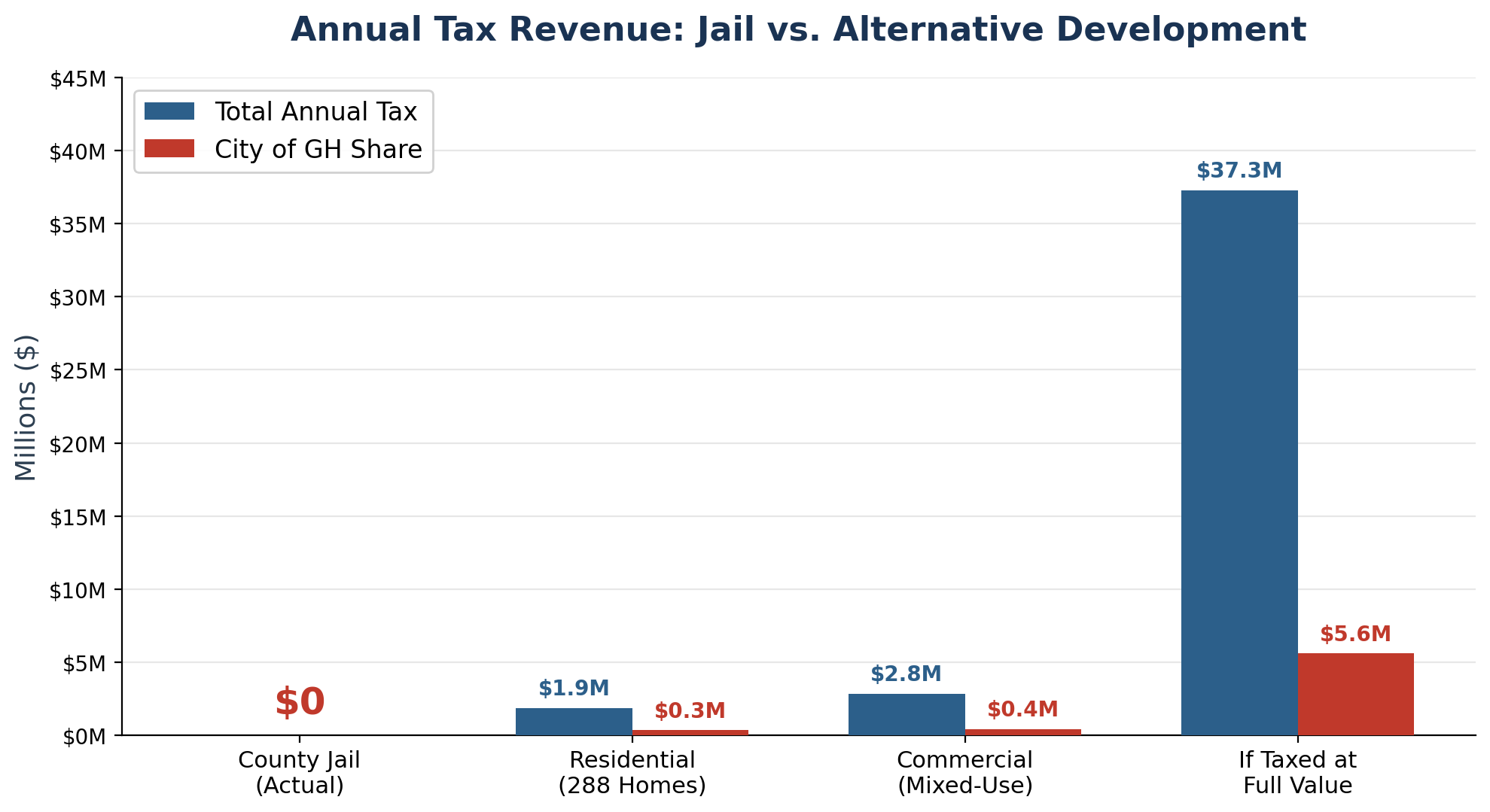
Fig. 4: Annual tax revenue comparison — the jail generates $0 while any private development would contribute
| Scenario | Market Value | Annual Total Tax | Annual City Share | 30-Year City Total |
|---|---|---|---|---|
| County Jail (Actual) | $1.036B | $0 | $0 | $0 |
| Residential (288 Homes) | $57.6M | $1,854,720 | $333,850 | $10,015,500 |
| Commercial (Mixed-Use) | $78.4M | $2,822,688 | $423,403 | $12,702,096 |
| If Taxed at Full Value | $1.036B | $37,296,000 | $5,594,400 | $167,832,000 |
Either scenario puts real money into the city’s budget. The jail puts in zero.
No PILOT Agreement
In other communities across Ohio and the nation, when a government entity builds a tax-exempt facility in a municipality, they negotiate what’s called a PILOT agreement — a Payment in Lieu of Taxes. It’s a way to compensate the host city for the revenue it’s giving up.
PILOT agreements can take many forms: annual cash payments, infrastructure improvements, commitments to hire local residents, or dedicated funding for schools and public safety.
As of today, no formal PILOT agreement between Cuyahoga County and the City of Garfield Heights has been publicly announced.
The $38.7 million the county paid for the land went to Craig Realty Group — the private seller. Not a dollar of that purchase went to the City of Garfield Heights.
The Bigger Picture
This isn’t happening in a vacuum. Garfield Heights residents are already dealing with:
- Rising costs driven by federal tariffs pushing up the price of everything from groceries to building materials
- Reduced state funding as Ohio’s flattened income tax has cut revenue-sharing distributions to cities across the state
- A school district in deficit that can’t afford to lose a single dollar of levy revenue
- Aging infrastructure that demands constant investment just to maintain basic services
Against that backdrop, losing $37.3 million per year in potential property tax revenue isn’t just an accounting line item. It’s the difference between a city that can invest in its future and one that’s perpetually struggling to keep up.
What Needs to Happen
I’m not here to say the county shouldn’t build a new jail. The current downtown facility has serious problems, and everyone agrees it needs to be replaced.
But the residents of Garfield Heights deserve to be made whole. When you place a billion-dollar tax-exempt facility in a community of 30,000 people, you have an obligation to offset the impact. Other counties do it. Other states do it. Cuyahoga County should do it too.
Here’s what I’m calling for:
- A formal PILOT agreement that provides Garfield Heights with annual payments reflecting a fair share of what the property taxes would have been
- Dedicated infrastructure investment in roads, utilities, and public facilities surrounding the jail site
- A local hiring commitment ensuring Garfield Heights residents get priority for the estimated 300+ permanent jobs at the facility
- Revenue sharing from facility operations to fund schools, parks, and public safety
- Full transparency — regular public reporting on how the county is meeting its obligations to our community
What You Can Do
This isn’t a done deal. The county council listens when residents show up.
- Attend Cuyahoga County Council meetings and demand a PILOT agreement for Garfield Heights
- Contact your county council representative and ask what they’re doing to offset the revenue loss
- Talk to your neighbors — share this information so every resident understands what’s at stake
- Show up at Garfield Heights City Council meetings and ask what our local leaders are doing to negotiate on our behalf
Seventy-two acres. A billion dollars in construction.
And not one cent in property tax for the city that hosts it.
Garfield Heights deserves better. And it’s up to all of us to demand it.
Sources: U.S. Census Bureau, Cuyahoga County Treasurer, Ohio Revised Code §5713.03, WKYC, Ideastream Public Media, News 5 Cleveland, LoopNet, Policy Matters Ohio. Property tax distribution percentages are estimates based on typical Cuyahoga County inner-ring suburb levy structures. All figures in 2026 dollars.

Use your browser's "Save as PDF" option when the print dialog opens
