Time to Right-Size City Council: Why Garfield Heights Should Go from 7 Members to 5

In 1970, Garfield Heights was home to 41,417 people. Our seven-member city council — one representative per ward — made perfect sense. Each member served roughly 5,917 residents. The ratio was right. The structure matched the city.
That was 56 years ago.
Today, Garfield Heights has 29,781 residents. We’ve lost 28% of our population since that peak. But our city council? It hasn’t changed at all. We still have seven members representing seven wards — only now each member serves just 4,254 people.
It’s time to ask a simple question: Does a city of 30,000 need seven council members?
I believe the answer is no. And I’m proposing we do something about it.
The Numbers Don’t Lie
Garfield Heights has been shrinking for over fifty years. The population boom of the 1950s and 1960s peaked in 1970. Every census since has shown decline, with the exception of a modest 3.2% uptick in 2020.
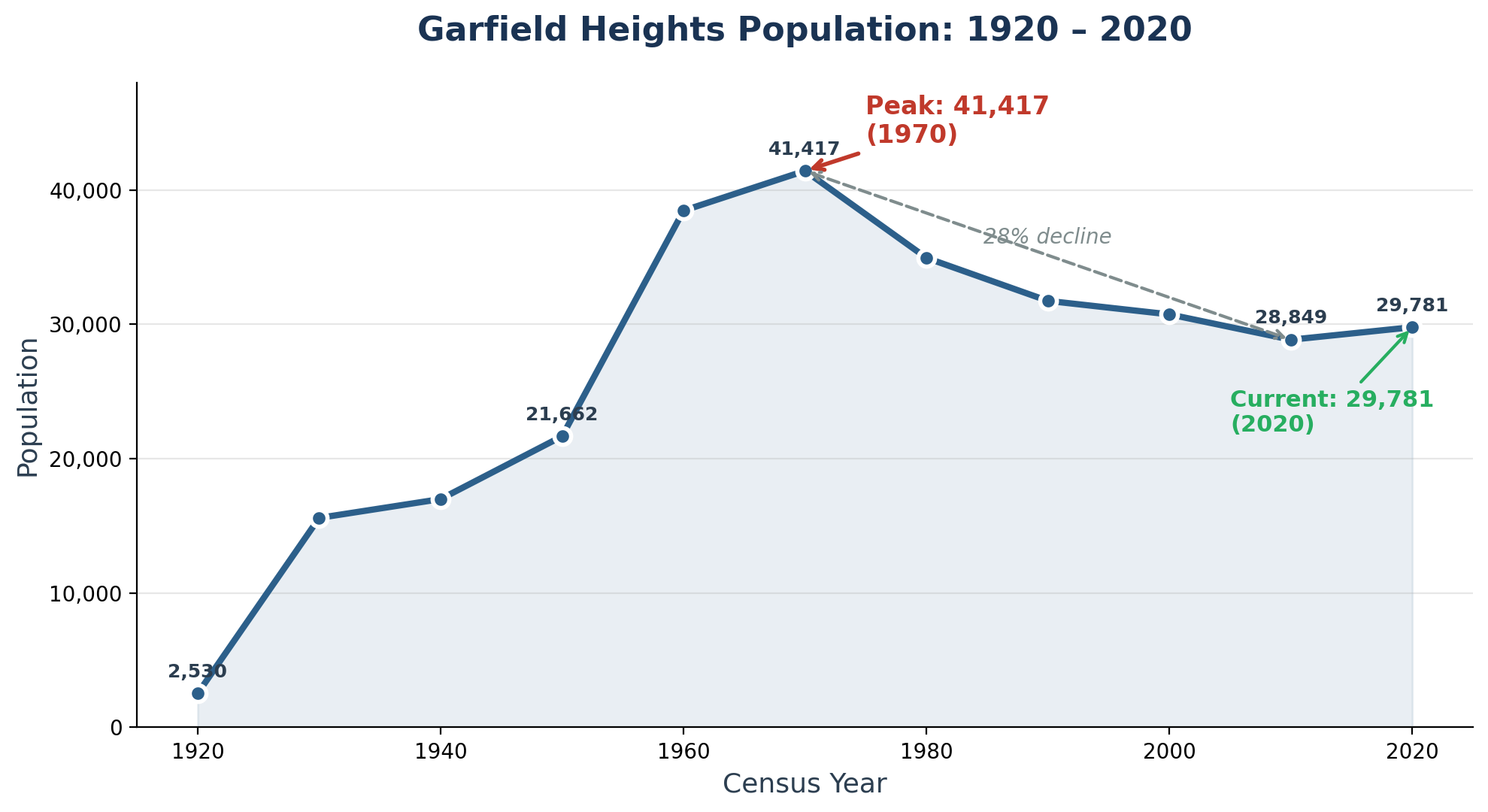
Figure 1: Population peaked at 41,417 in 1970 and declined 28% over the next four decades
| Census Year | Population | Change | Council Size |
|---|---|---|---|
| 1960 | 38,455 | +77.5% | 7 (Charter 1956) |
| 1970 | 41,417 | +7.7% | 7 — Peak |
| 1980 | 34,938 | −15.6% | 7 |
| 1990 | 31,739 | −9.2% | 7 |
| 2000 | 30,734 | −3.2% | 7 |
| 2010 | 28,849 | −6.1% | 7 |
| 2020 | 29,781 | +3.2% | 7 |
Meanwhile, the council structure hasn’t changed since the 1956 charter established seven wards. The population dropped. The council didn’t.
The Representation Problem
At the city’s peak in 1970, each council member represented 5,917 residents. Today, with seven members serving 29,781 people, each represents only 4,254. That means taxpayers are paying for representation that’s 28% larger than what the population warrants.
If we reduce council to five members, each would represent 5,956 residents — almost exactly the same ratio as 1970. We’re not cutting representation. We’re restoring it to what it was when the city was at its strongest.
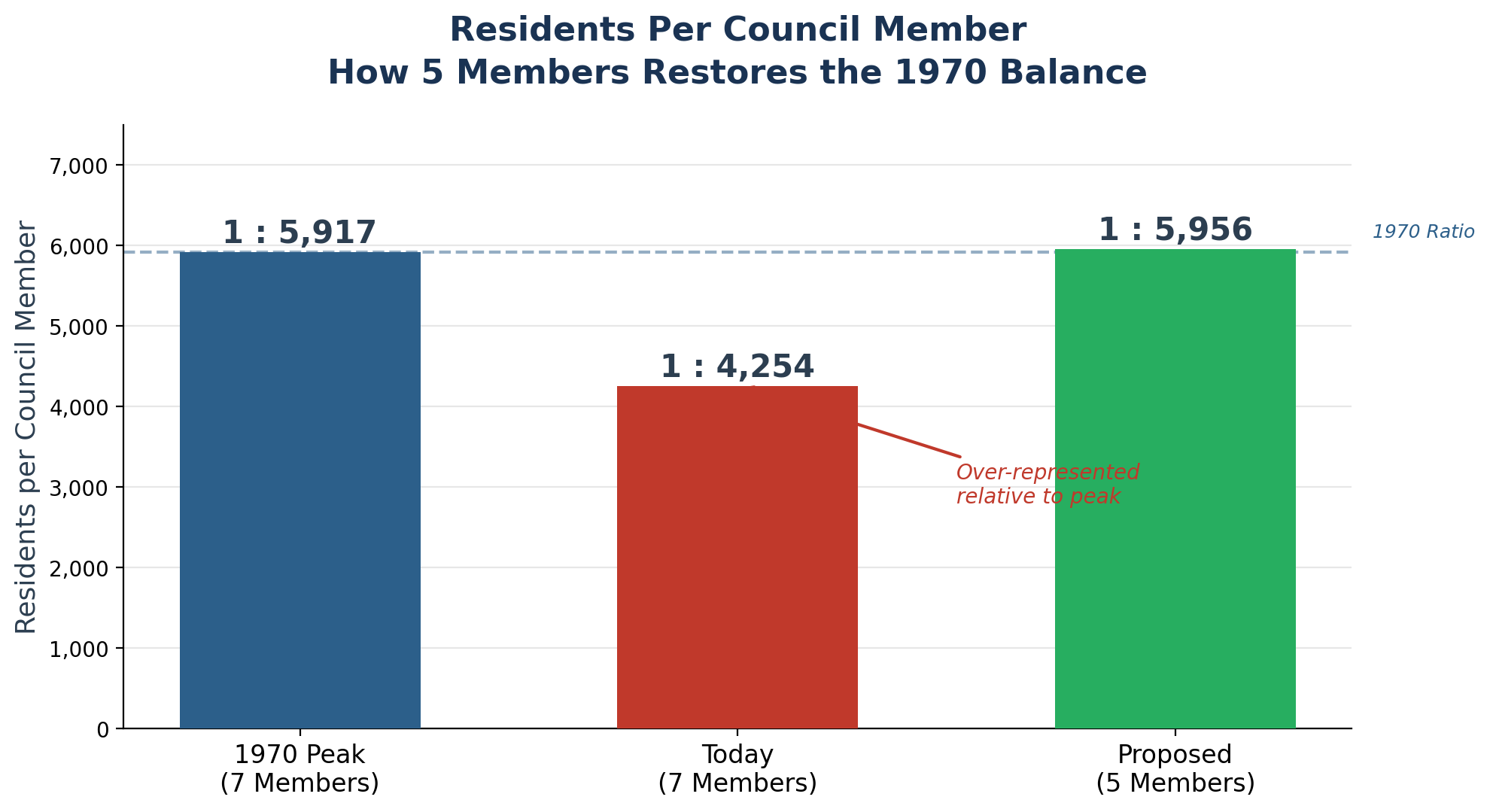
Figure 2: Five members restores the per-member representation ratio to the 1970 peak
| 7-Member Council (Current) | 5-Member Council (Proposed) | |
|---|---|---|
| Council Members | 7 | 5 |
| Wards | 7 | 5 (redrawn) |
| Residents per Member | 4,254 | 5,956 |
| Matches 1970 Peak Ratio? | No | Yes — nearly identical |
| Est. Annual Savings | — | $30,000 – $50,000+ |
Why This Matters Now
This isn’t just about numbers on a chart. Garfield Heights is under real fiscal pressure:
- Federal tariffs are driving up costs on everything from road materials to city vehicle parts
- Ohio’s flattened income tax has reduced state revenue-sharing distributions to municipalities
- Our school district is running a $2.9 million deficit
- 72 acres of prime real estate just went tax-exempt for the county jail — costing us millions in annual property tax revenue
Every dollar the city spends needs to count. Reducing council from seven to five members would save taxpayers an estimated $30,000 to $50,000+ per year in salary, benefits, and administrative costs.
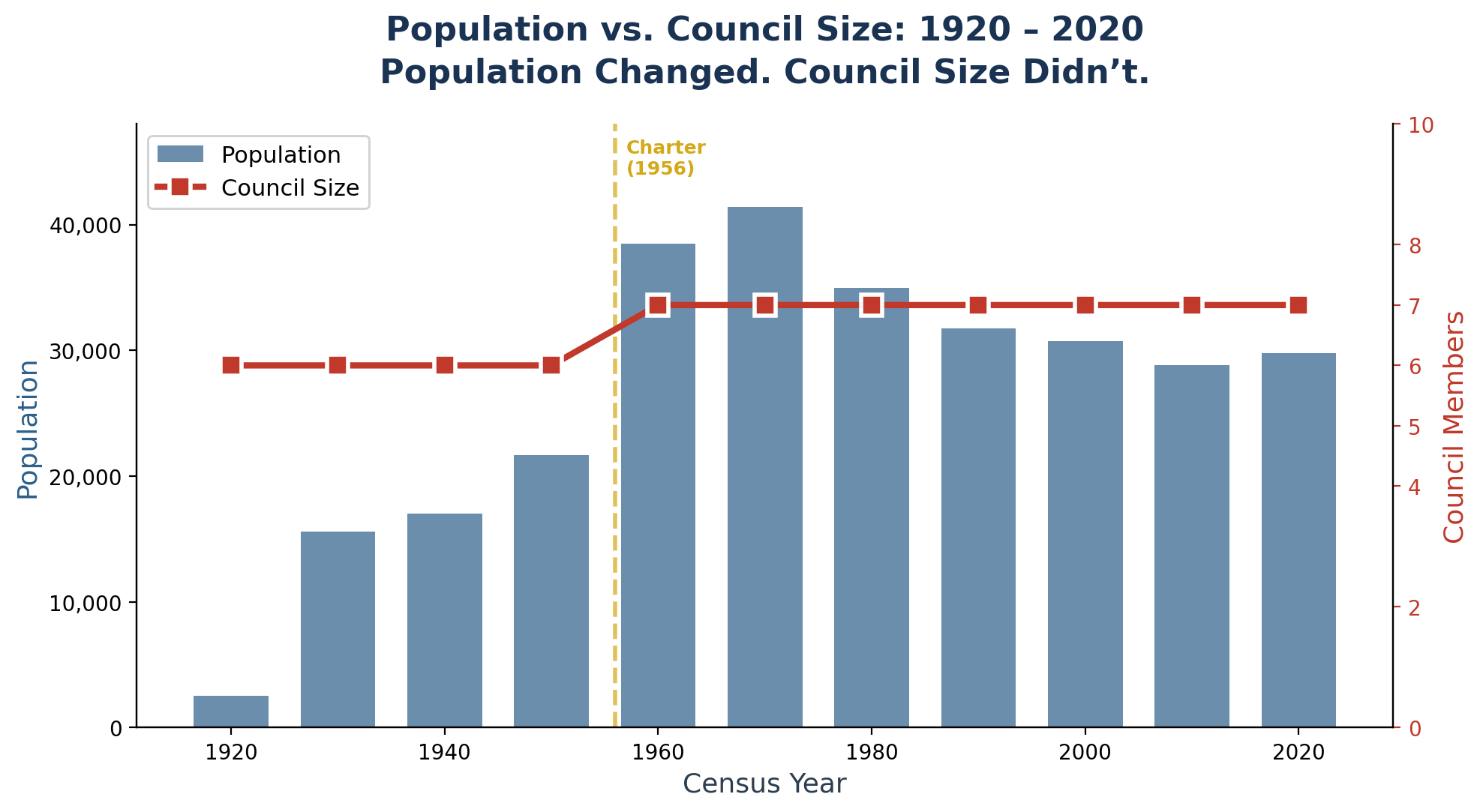
Figure 3: Population changed dramatically. Council size stayed the same.
How Other Cities Do It
Garfield Heights isn’t the first Ohio city to face this question. Numerous municipalities of comparable size operate effectively with five council members. Smaller councils promote:
- More focused deliberation — fewer voices means deeper discussion on each issue
- Faster decision-making — fewer schedules to coordinate, fewer votes to count
- Stronger accountability — each member serves more constituents and carries more responsibility
- Lower overhead — fewer positions to staff, support, and compensate
How It Would Work
Under Ohio law, a charter city like Garfield Heights can amend its charter in two ways:
- Council resolution — A two-thirds vote of council places the amendment on the ballot
- Citizen petition — Signatures from 10% of qualified electors (~2,000–2,500) force the question onto the ballot
Either way, the final decision belongs to the voters. The proposed amendment would:
- Reduce council from seven (7) to five (5) members
- Require redistricting into five wards of substantially equal population
- Allow current members to complete their terms before the transition
- Maintain the council president selected from among members
“Shall the Charter of the City of Garfield Heights be amended to reduce the number of City Council members from seven (7) to five (5), with five wards of substantially equal population, to align the size of council with the city’s current population and reduce the cost of government?”
Proposed ballot language
Why I’m Advocating for This
I served as Council President Pro Tem. I’ve sat in those chambers. I know how city council works — and I know where it doesn’t work as well as it should.
This isn’t about taking power away from anyone. It’s about right-sizing our government to match our community. A city of 30,000 doesn’t need the same structure it had at 41,000. And at a time when every dollar is under pressure, we can’t afford to ignore common-sense reforms.
What You Can Do
If you believe Garfield Heights deserves a council that reflects the city as it is today — not as it was in 1970 — here’s how you can help:
- Talk to your council representative and ask if they support placing this amendment on the ballot
- Sign a petition if a citizen-led effort moves forward
- Attend city council meetings and make your voice heard
- Share this article with your neighbors — this is a conversation the entire community needs to have
The population changed. The budget tightened. The pressures grew.
It’s time the council changed too.
Sources: U.S. Census Bureau (Decennial Census 1920–2020), Garfield Heights City Charter, Ohio Revised Code, Cuyahoga County Board of Elections, garfieldhts.org. Pre-charter (pre-1956) council sizes are estimates based on Ohio village statutes.

Use your browser's "Save as PDF" option when the print dialog opens
